NewFor students, PhDs and research teams
Spend less time managing papers. More time understanding them.
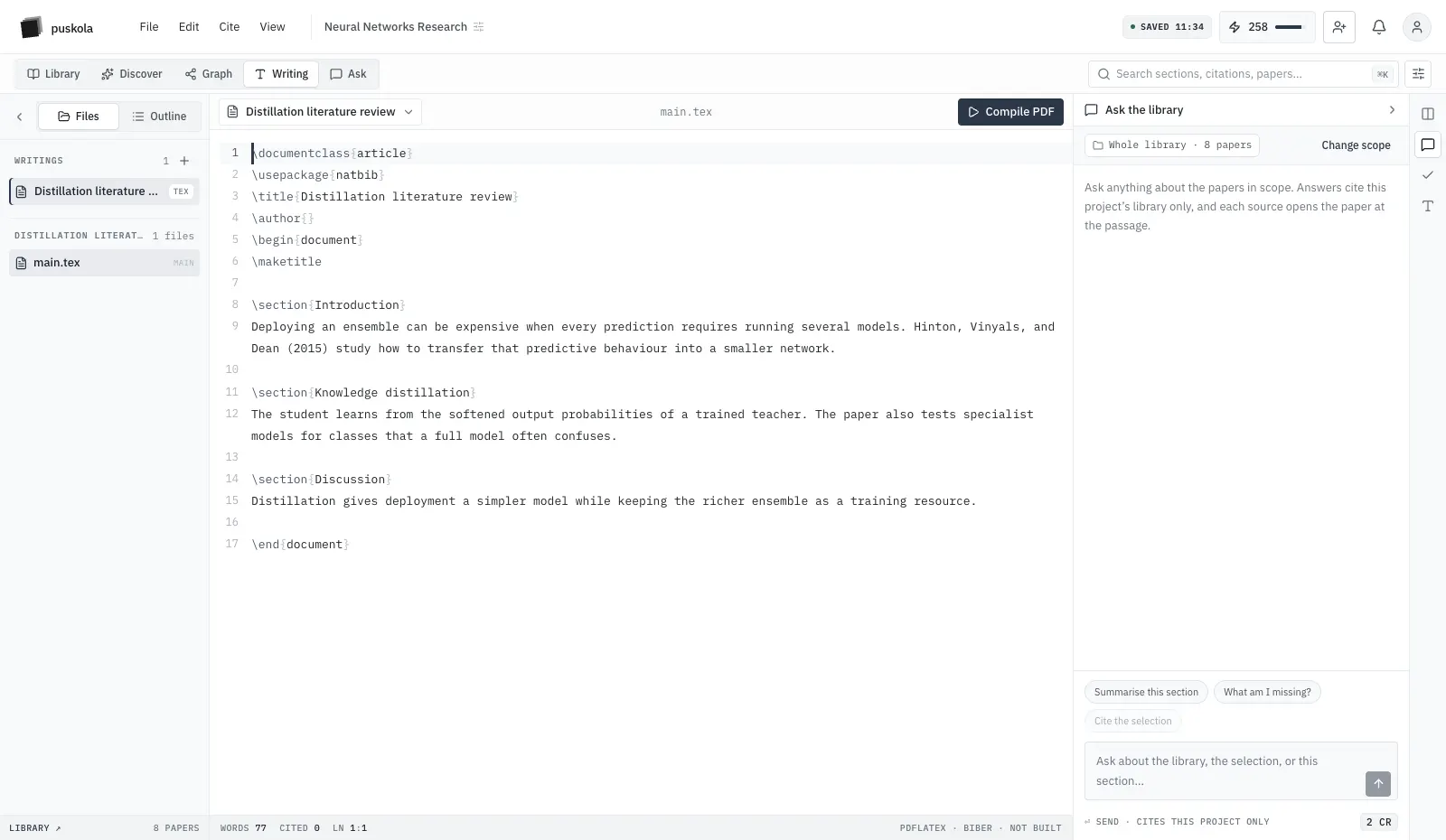
Keep every paper for your project in one place. Get a clear summary of each, ask questions and see exactly which page the answer came from, then write your thesis or article with your sources right beside you.
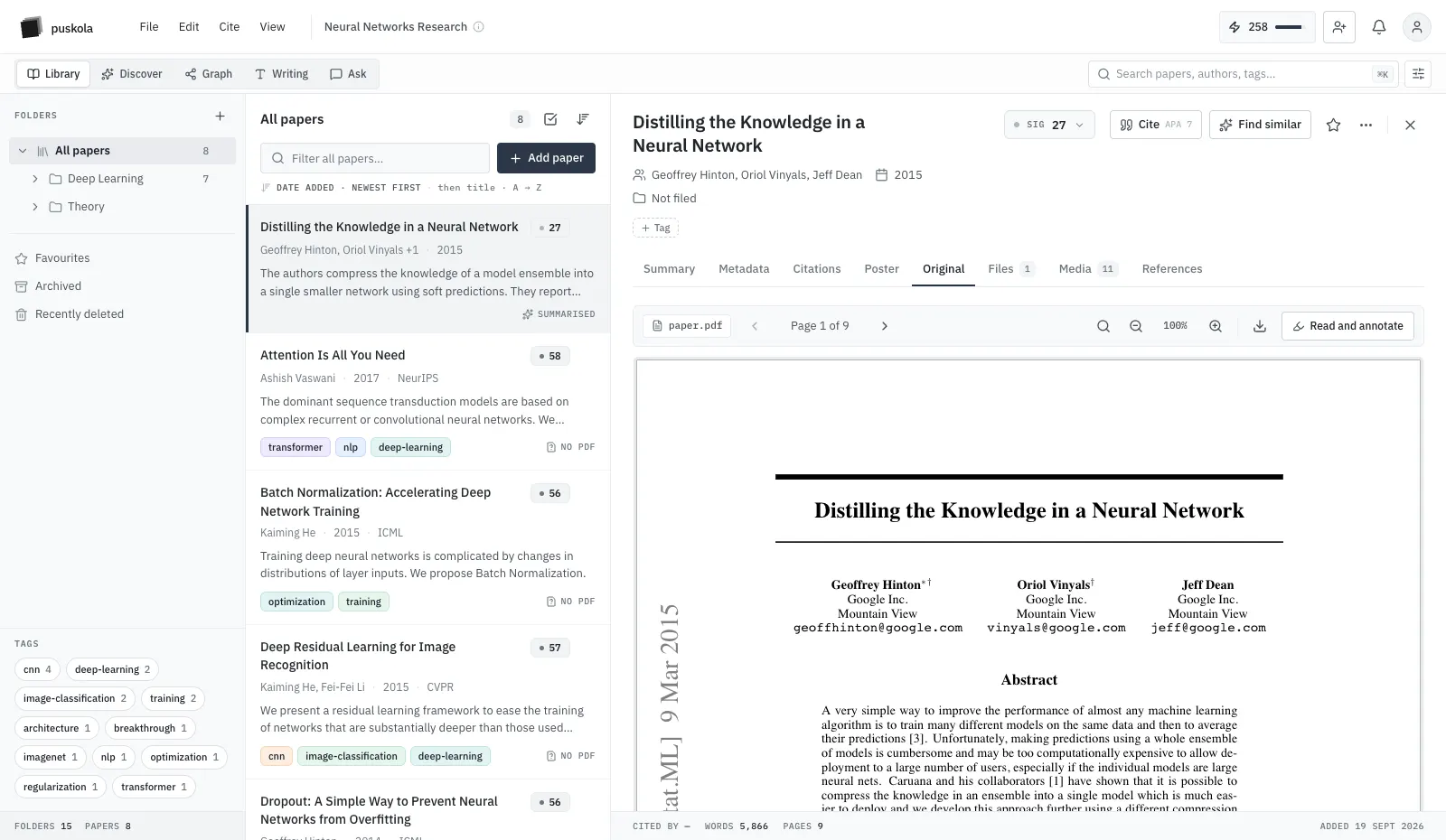
How it works
From reading list to finished draft.
No more juggling a folder of PDFs, a reference manager, a notes app and a word processor. Everything stays in one project, from the first paper you save to the last citation you add.
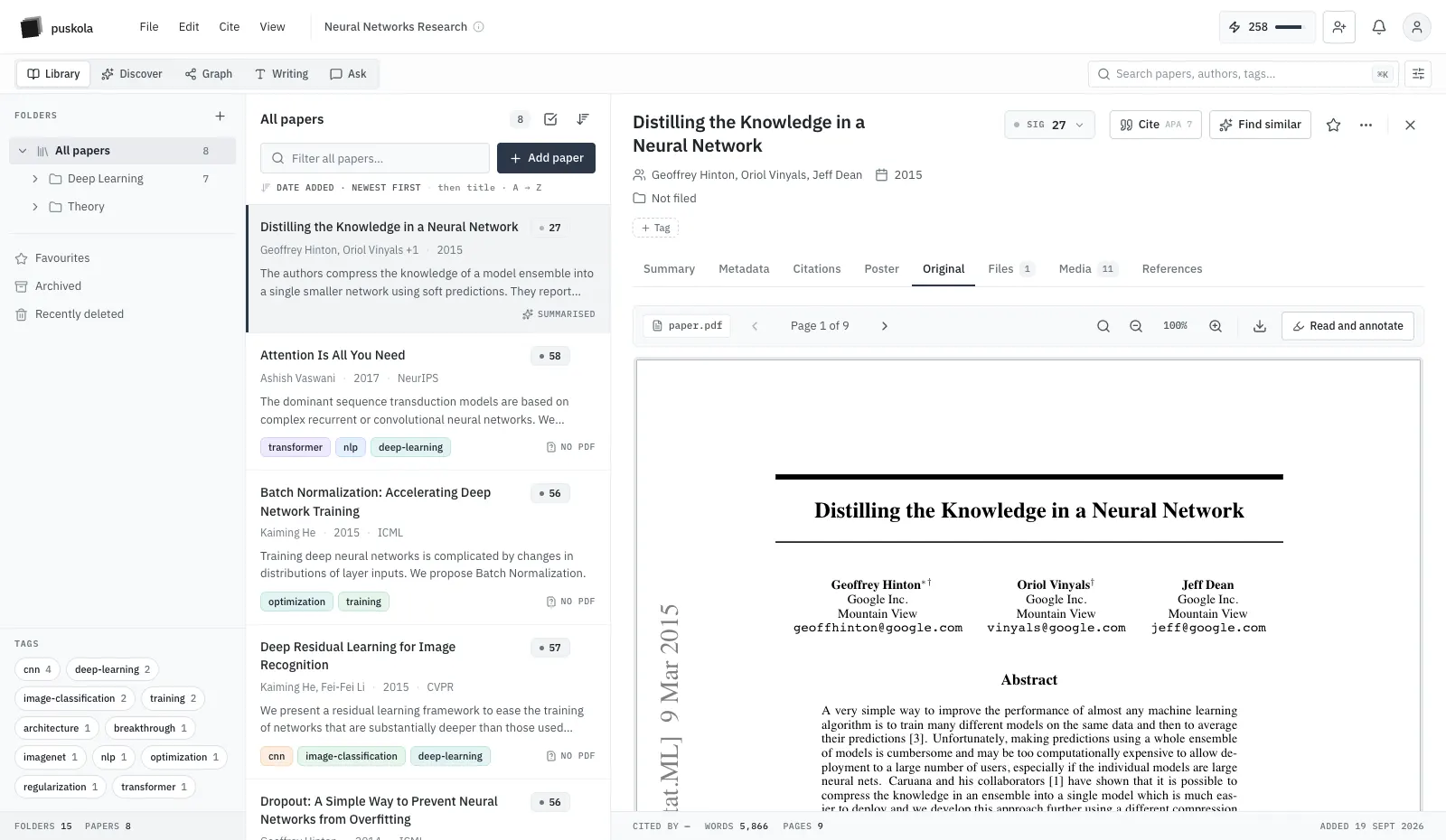
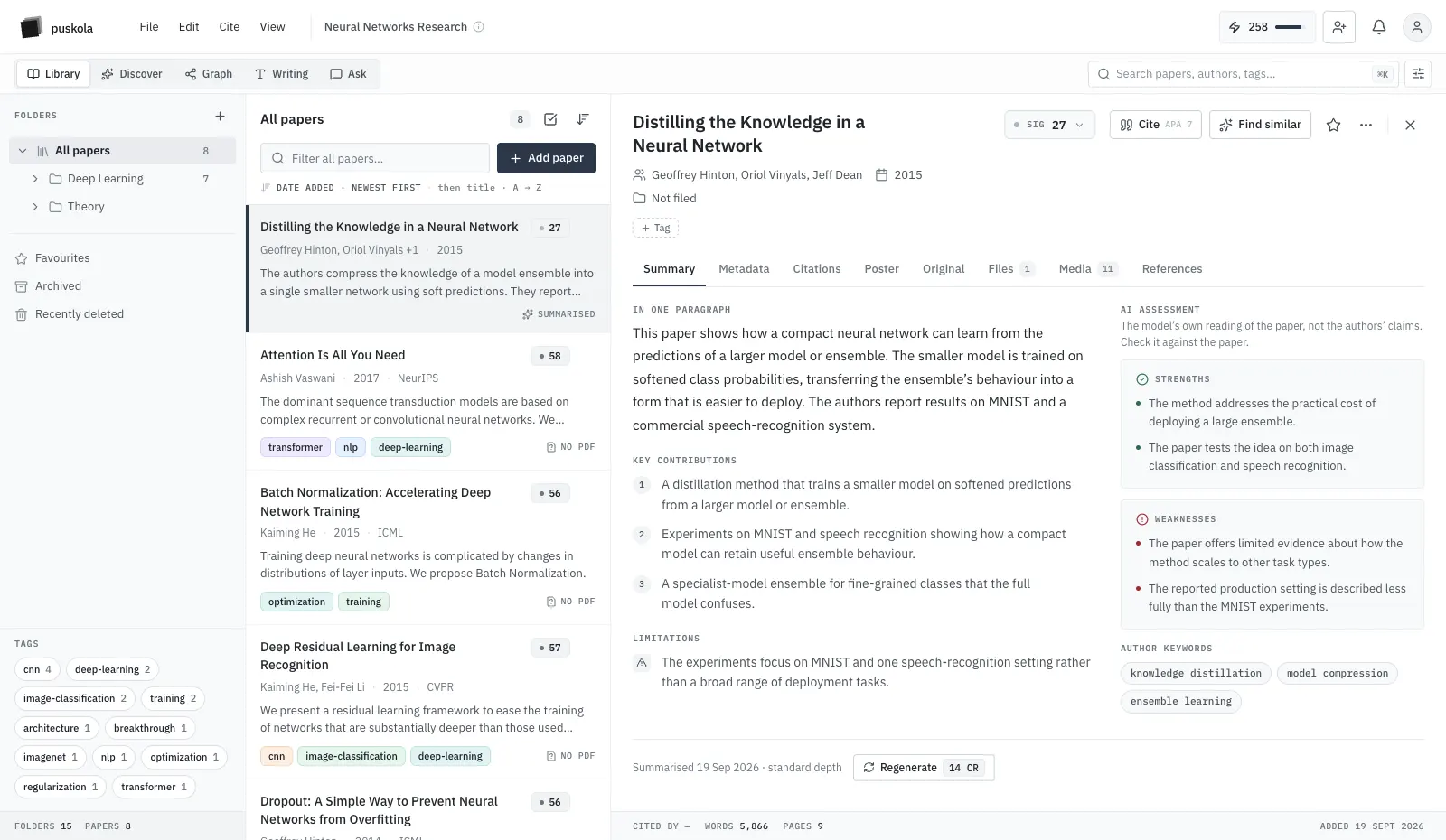
Answers you can trust
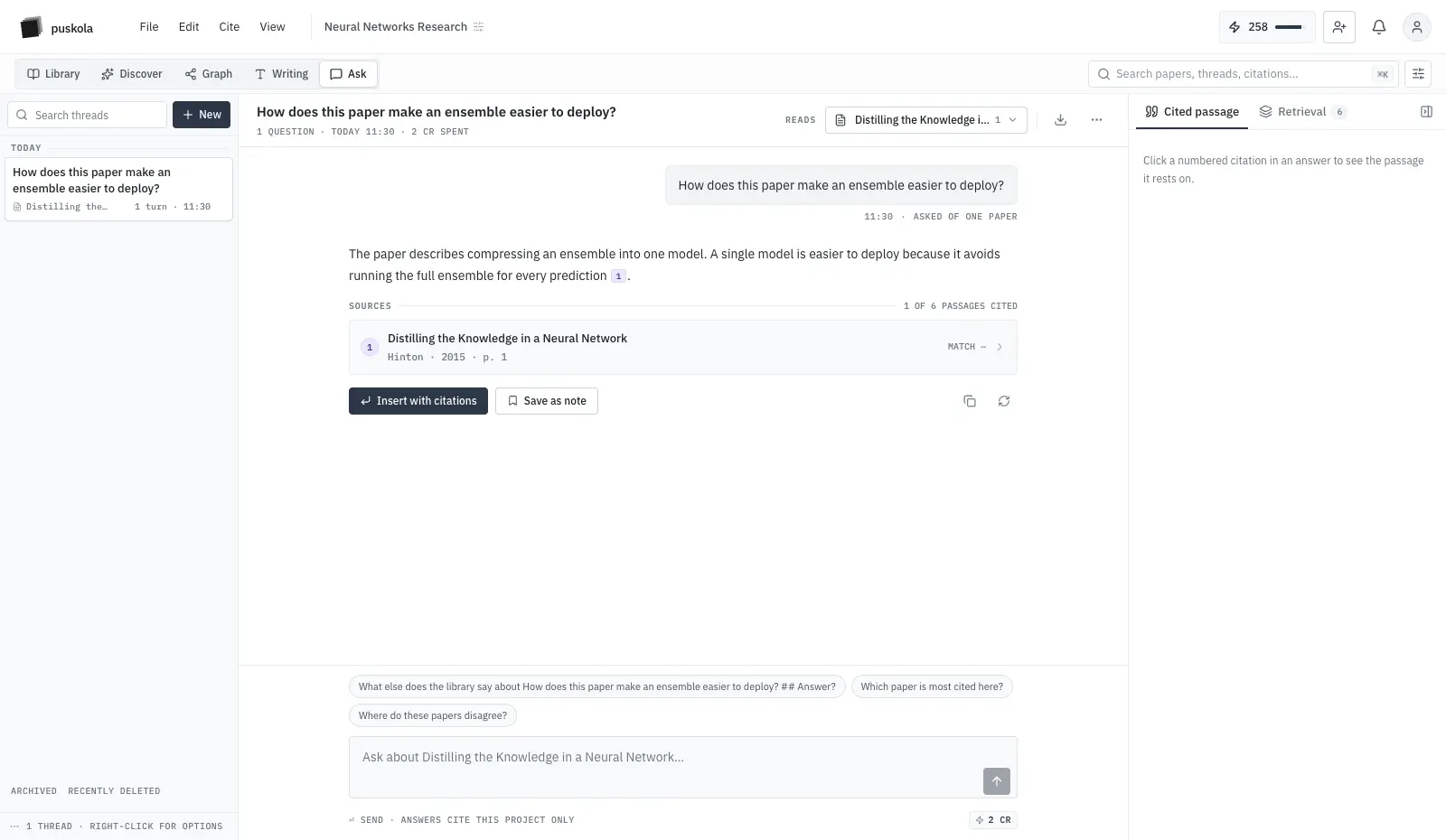
Every answer shows where it came from.
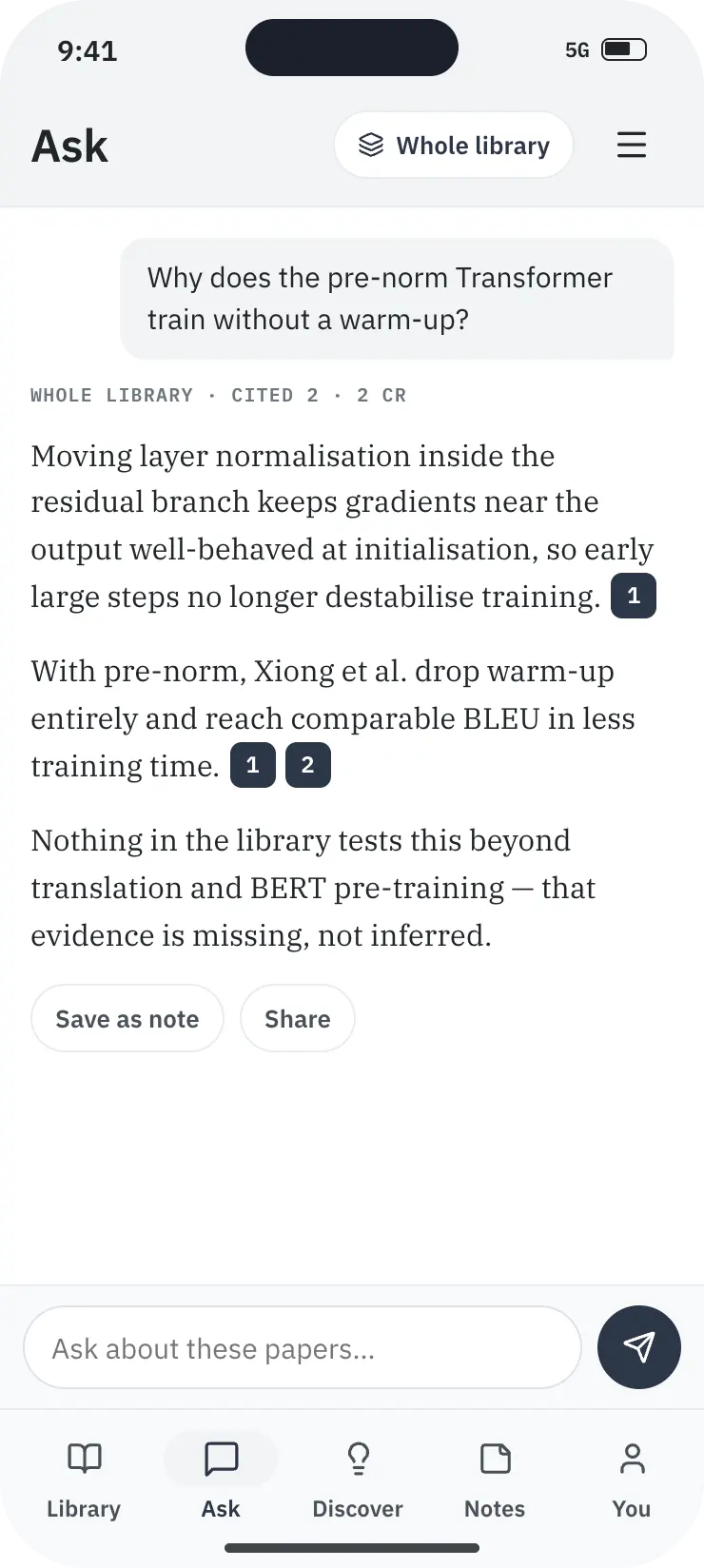
Ask a question in plain language and get an answer drawn only from the papers you’ve added. Each citation opens the exact passage, so you can check it yourself before you quote it.
Try it: click [1] or [2] in the answer →
Q Why did residual connections make very deep networks trainable?
Stacking more layers made plain networks harder to optimize, not just prone to overfitting. Learning a residual — the change on top of an identity mapping — gave each block an easy default , and normalizing layer inputs kept the signal stable as depth grew .
“We explicitly let these layers fit a residual mapping… it is easier to optimize the residual mapping than to optimize the original, unreferenced mapping.”
“Training deep neural networks is complicated by the fact that the distribution of each layer’s inputs changes during training.”
On all your devices
One library, on every device.
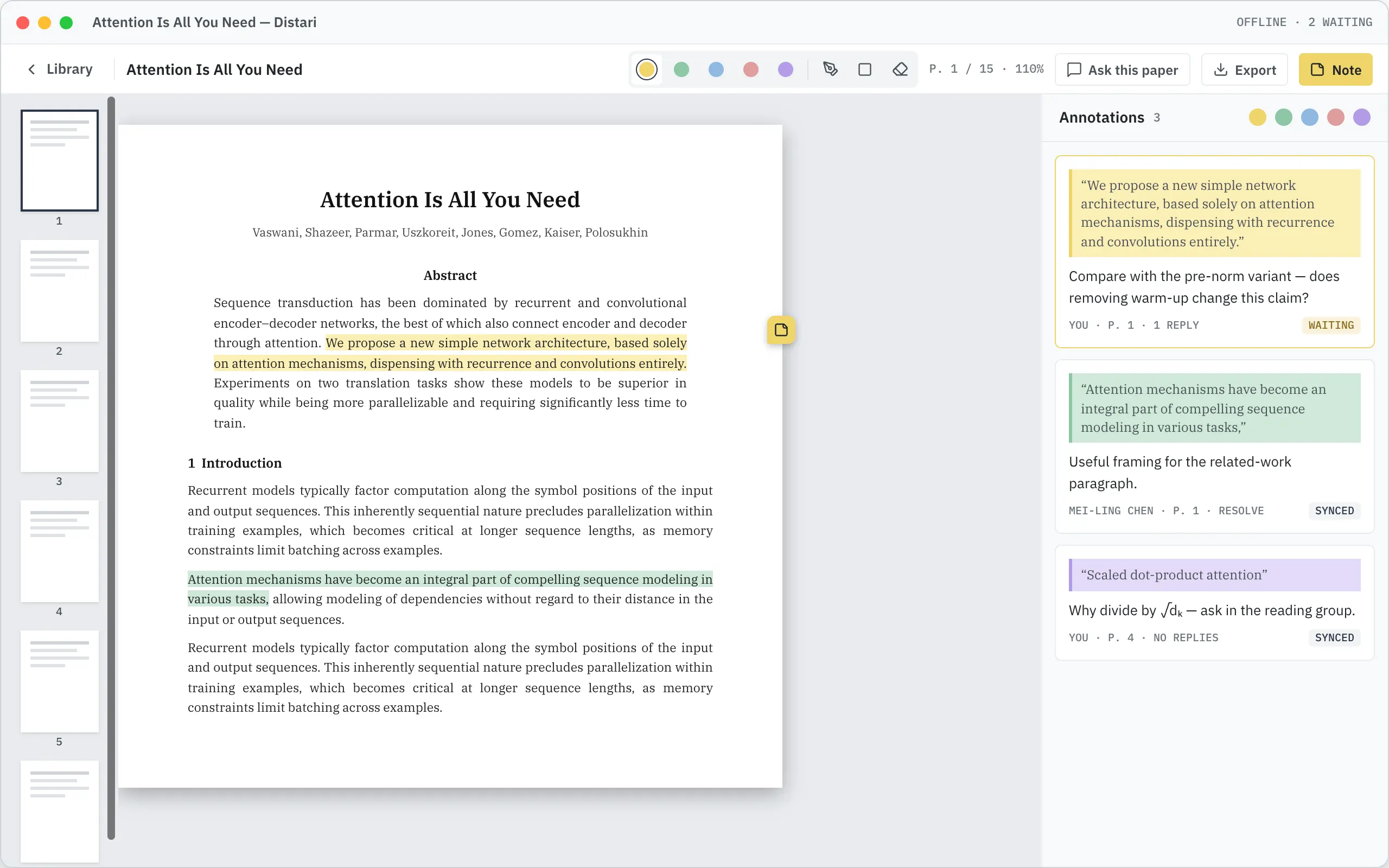
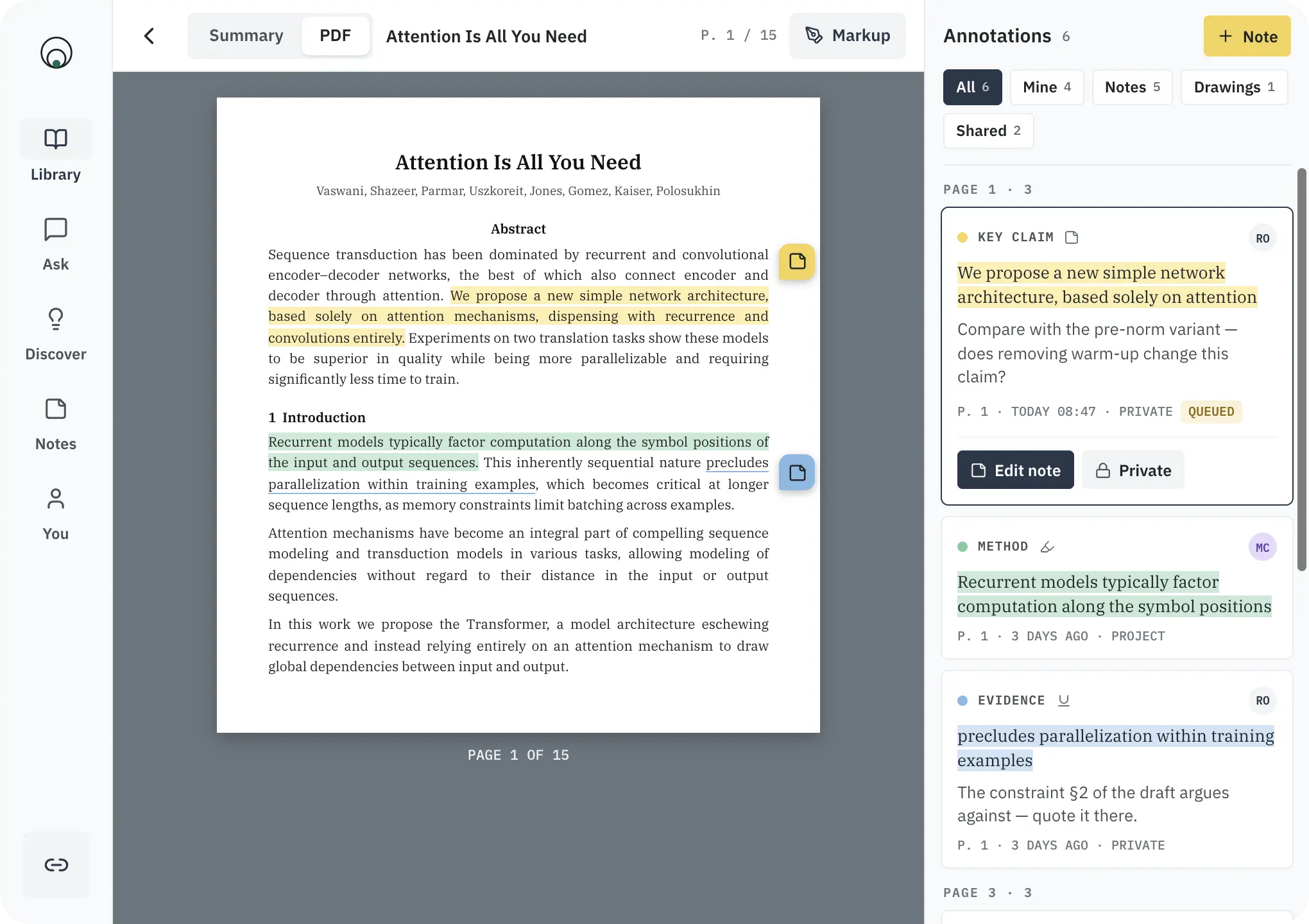
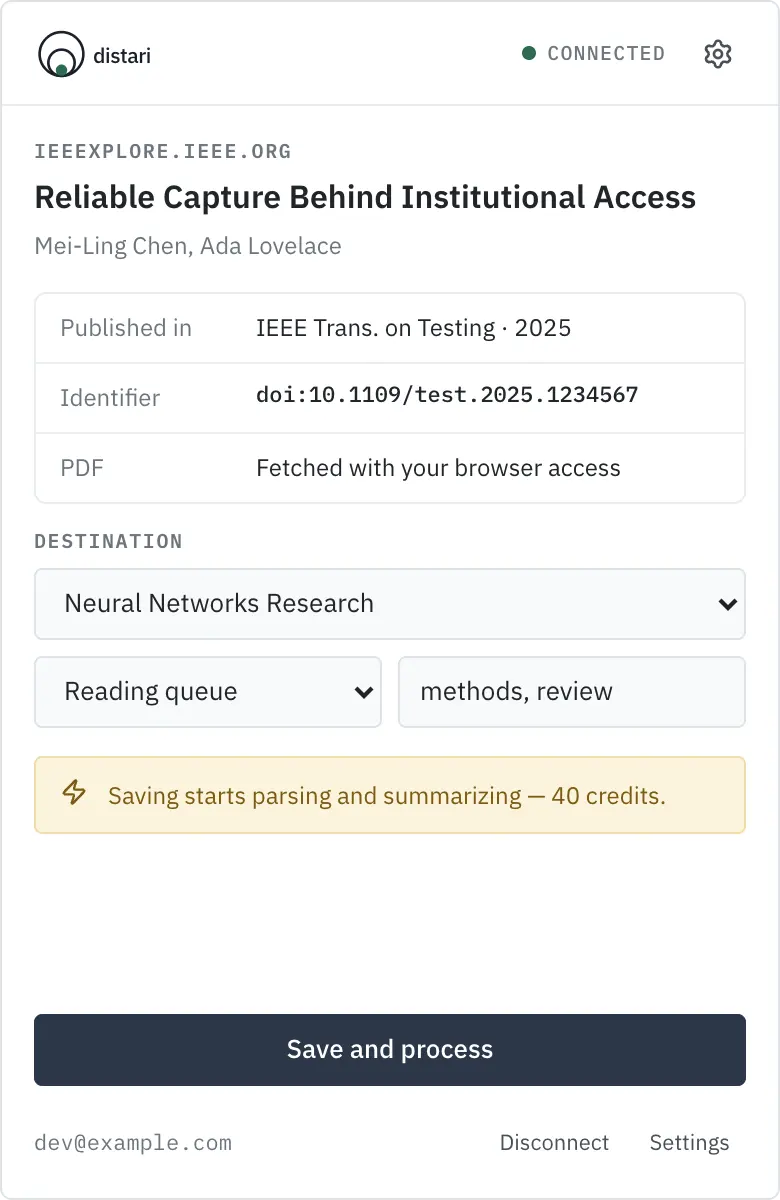
Save a paper from the journal’s website, add notes on your tablet, catch up on your phone and write at your desk. Your notes and highlights sync everywhere.
See all apps and downloads →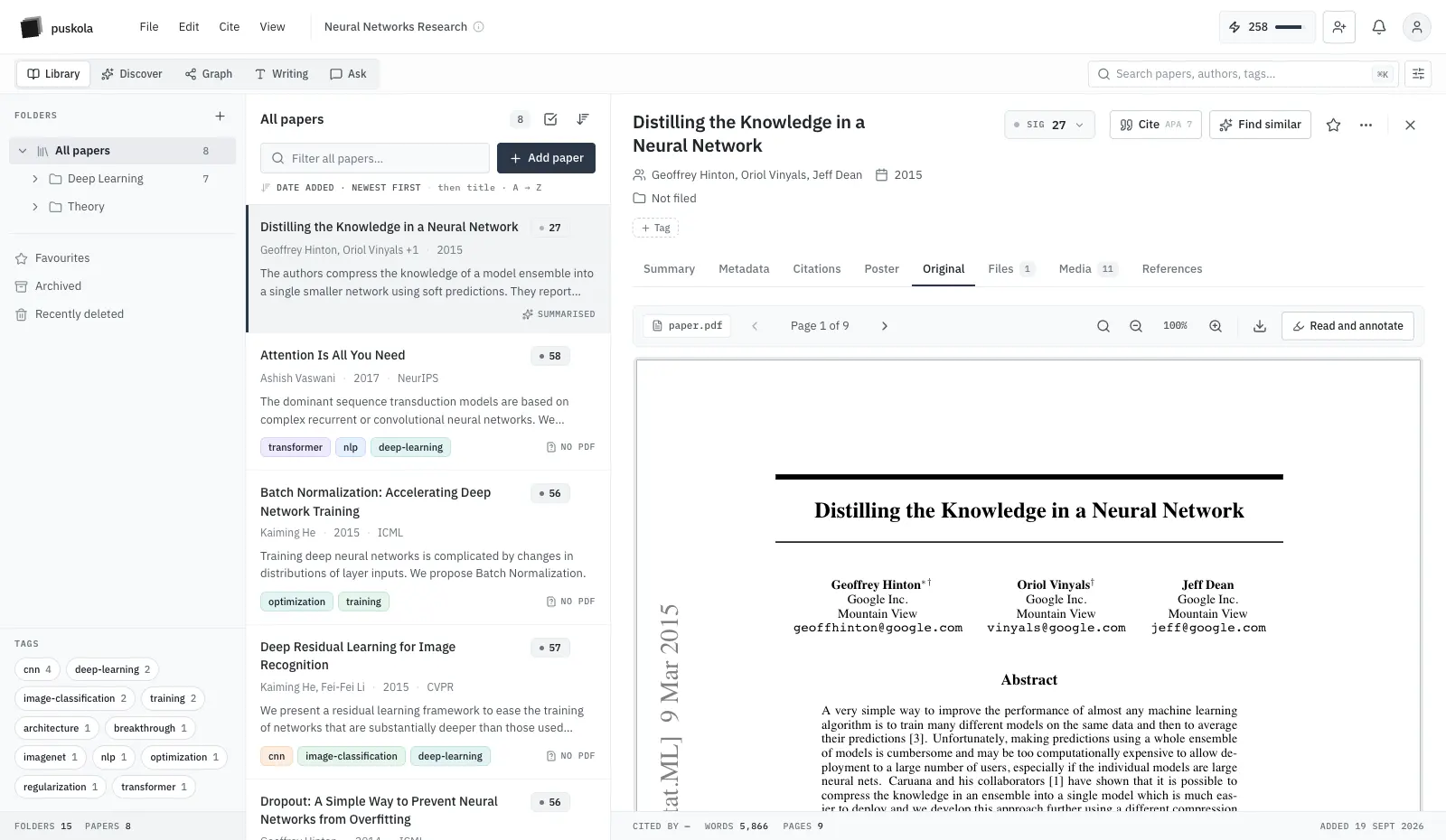
Free to start
Make your next paper easier to write.
Free plan includes 300 credits a month · No credit card needed
Apps for Mac, Windows, Linux, iPhone, Android, Chrome and Firefox are in validation